Black Lives Matter in Higher Education

This oral history project documents the formation and impact of the student-led movement of Black Lives Matter in Higher Education (BLMHE). Housed within Teachers College Higher and Postsecondary Education Program (HPSE), this group consists of HPSE students and faculty that have come together to analyze the effects of systemic societal forces on members of the HPSE community and their broader effects on higher education.

Interviews

Taking a decolonial approach toward documenting this group, Cynthia Tobar collaborated with and worked alongside student activists in BLMHE. These interviews seek to demonstrate issues of microaggressions, diversity & inclusion, sense of belonging and the role of Teachers College faculty in the Higher and Postsecondary program in combating racism in higher education.

Interview with Charlen McNeill

Charlen McNeil, a co-founder and former Ed.M. student at TC, from Hoboken, New Jersey, describes how her family background and growing up in the Hoboken Projects influenced her early forays into activism. In this interview, Charlen describes how her family’s involvement in the Black Panther Party and the NAACP played a critical part in her burgeoning activism. Charlen reflects on how the realization of how TC values diversity and inclusion has influenced her experience as a student and her future aspirations for a future as a higher education professional.

Download Transcript

Interview with Kat Stephens

Kat Stephens, a co-founder and former Ed.M student in the HPSE program, was born in Guyana, South America, who as a child emigrated to New York City. In this interview, Kat expresses how she perceives performing blackness in an American context amongst other groups at TC has helped her more confidently center her own identity, and how she has arrived at a point in her life where she is no longer performing and is proud of her AfroCarribean roots. Kat describes how from the beginning of these brainstorming sessions, the students were interested in a distinctly different vision of activism that would go beyond direct action tactics such as protests or rallies.

Download Transcript

Interview with Brian Allen

Brian Allen, a co-founder of BLMHE, is currently a doctoral student in the HPSE program who began at TC as a Masters student. In this interview, he shares his thoughts on what his vision of activism was like before becoming involved with BLMHE and how it has changed over time.

Download Transcript

Interview with Ashley Ogwo, Part 1

Ashlely Ogwo, is a former EdM student in the HPSE program, and currently a doctoral student in the University of Maryland. In this interview, she describes her time growing up in Detroit as an Igbo American, her early educational experiences and her undergraduate journey before pursuing higher education as a field of study at Teachers College.

Download Transcript

Interview with Ashley Ogwo, Part 2

In part 2 of this interview, Ashley Ogwo shares her internal journey as a graduate student while at Teachers College, as well as her involvement in BLMHE. She describes how her involvement with BLMHE helped her realize that activism can take many different forms within higher education.

Download Transcript

Interview with Jenay Willis

Jenay Willis, is a former EdM student in the HPSE program, and currently a doctoral student in the University of Pittsburgh. In this interview, she shares her thoughts growing up in rural Georgia and the strong role her family’s support played in her education. She also describes how higher education in particular led to her growing sense of empowerment by the time she arrived at Teachers College and became involved with BLMHE.

Download Transcript

Interview with Dr. Corbin Campbell

Dr. Corbin Campbell, was an Associate Professor in the HPSE Program at TC, and currently a Associate Dean of Academic Affairs and Associate Professor in the School of Education at American University. In this interview, she expresses how her goal as a higher education educator is to have all students feel a sense of belonging in the classroom. She describes how her desire to create antirascist spaces for students, especially students who have typically been voiceless in higher education, led to her support for and allyship involvement with BLMHE, and how it impacted her thinking on centering issues of equity in higher education as an educator and higher education administrator.

Download Transcript

Timeline

2013

BLM movement begins

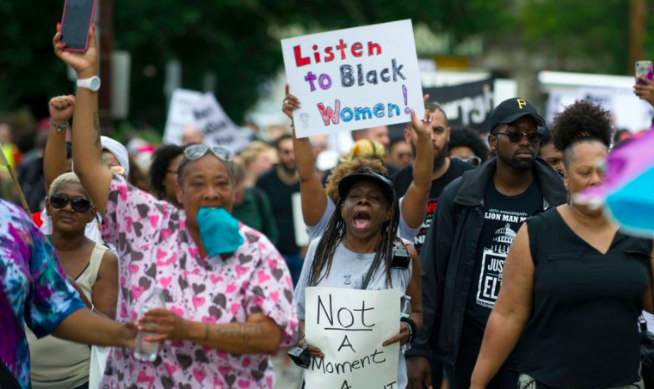
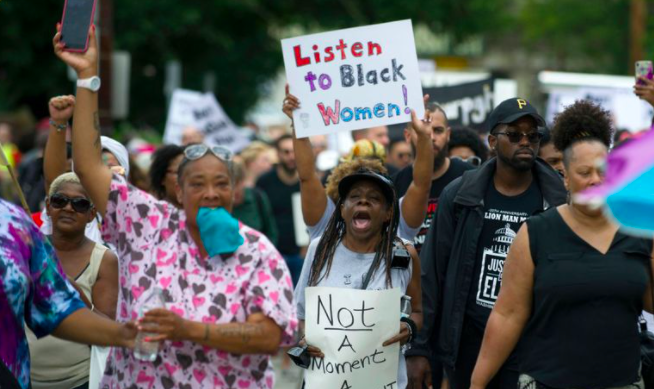
The Black Lives Matter movement began in 2013, following the death of Trayvon Martin, an African-American teenager who was shot while walking to a family friend's house, and the subsequent acquittal of George Zimmerman, the man who shot him.

The campaign was co-founded by three Black women: Alicia Garza, Patrisse Cullors, and Opal Tometi, as a response to the police killings of Black people. The phrase "black lives matter" was first used in a Facebook post by Garza after Zimmerman was found not guilty, and was the inspiration for the campaign. Cullors recognised the power of Garza's words and created the hashtag #BlackLivesMatter, and the campaign was born.

2015

Deaths of Walter Scott, Freddie Gray, and Meagan Hockaday; Black Trans Lives Matter

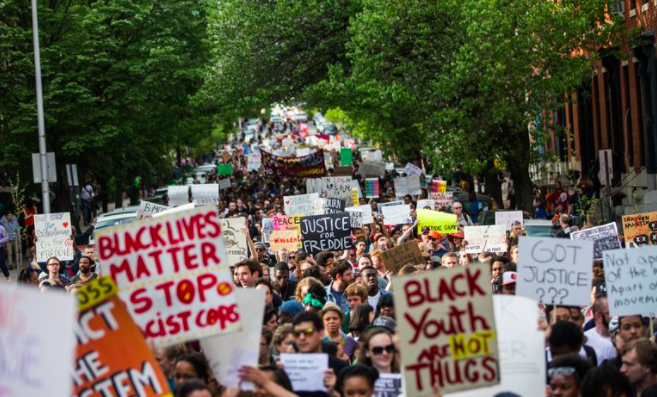
The following year saw another spate of Black people killed by police officers in the USA, including Walter Scott, Freddie Gray, and Meagan Hockaday. Black Lives Matter protested against these and many more. They also organised protests to highlight the injustices faced by Black women and Black transgender women. By the end of 2015, 21 transgender people had been killed that year in the USA, a record number at the time, and 13 of the victims were Black.

2016

Deaths of Danner and Sterling; Kaepernick protest

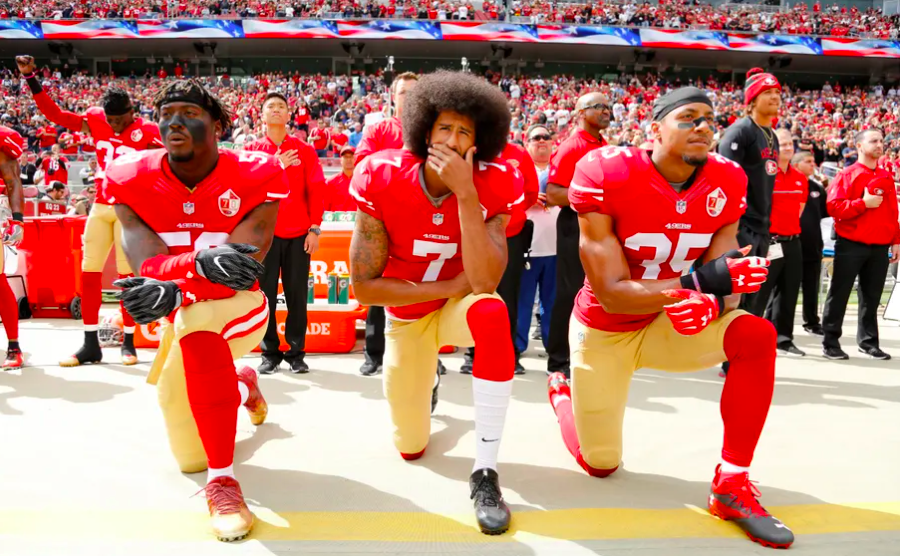
2016 saw Black Lives Matter organize many more protests against police brutality towards Black people. Those whose deaths occurred due to police actions included Deborah Danner and Alton Sterling. Early July saw over 100 protests take place across America following Sterling's death on July 5th, and Philandro Castile's shooting the next day. This year also saw major American sports stars lend their voices to the cause of Black Lives Matter. In July 2016, basketball players including LeBron James and Carmelo Anthony opened an awards ceremony by speaking about recent deaths of Black people, saying: "Enough is enough." Then, from August, many sports stars began taking part in protests during national anthems at sports games, beginning with Colin Kaepernick, who knelt during the anthem ahead of an NFL game.

BLMHE Kick-Off Event

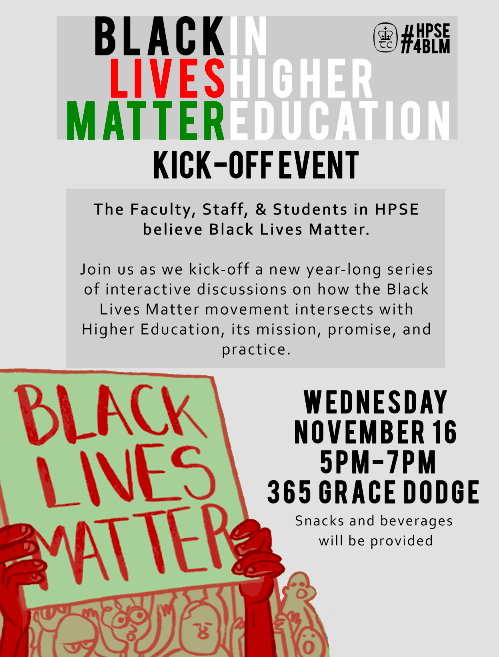
BLMHE hosted it's first kick-off event and was held in the Grace Dodge building at Teachers College. The event, which was attended by both HPSE faculty and students, was designed to help spark interactive discussions on how the Black Lives Matter movement intersects with higher education, and to develop BLMHE's mission and practice.

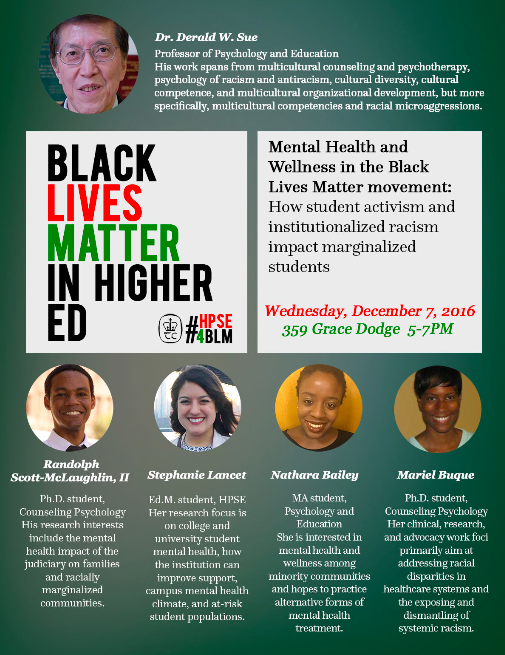
Mental Health and Wellness in the BLM Movement

This seminar focused on how student activism and institutionalized racism impacts marginalized students. It was held at Grace Dodge Hall. The graduate student panel consisted of Randolph Scott-McLaughlin, Stephanie Lancet, Nathara Bailey and Mariel Buque. The keynote speaker was Dr. Derald W. Sue, Professor of Psychology and Education.

2017

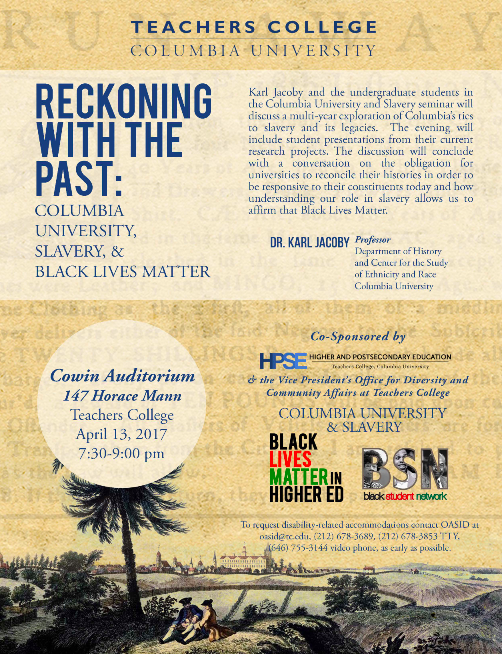
Reckoning with the Past: Columbia University, Slavery and Black Lives Matter

This seminar, which was co-sponsored by HPSE, the Vice President's Office for Diversity and Community Affairs at TC and the Black Student Network, was held at the Cowin Auditorium in the Horace Mann building at TC. The key speaker was Dr. Karl Jacoby, Professor from the Department of History and Center for the Study of Ethnicity and Race at Columbia University. Dr. Jacoby and his undergraduate students presented on the Columbia University and Slavery seminar as well as the students' current research projects. The discussion concluded with a conversation on the obligation of universities to reconcile their histories in order to be responsive to constituents today and how understanding their role in slavery can help affirm that Black Lives Matter.

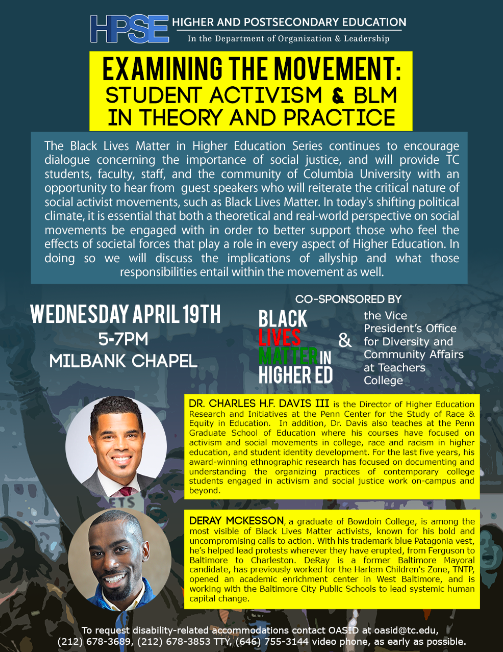
Examining the Movement: Student Activism and BLM in Theory and Practice

This seminar, held at the Milbank Chapel, features guest speakers Dr. Charles H.F. Davis III and Deray McKesson. The speakers reiterated the critical nature of social activist movements such as BLM in the current shifting political climate. They reflected on the essential nature that both a theoretical and real-world perspective on social movements are in order to engage and better support marginalized members within higher education. The implications of allyship and the resulting responsibilities within the movement were also discussed.

First BLM art exhibit; Castile court ruling and protest; Unite the Right rally

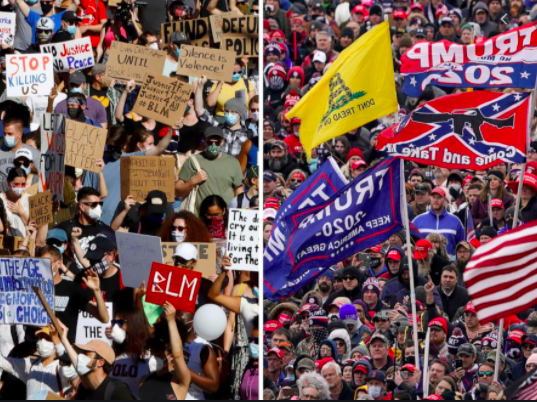
In 2017, Black Lives Matter put on their first art exhibition timed to coincide with Black History Month in the US state of Virginia. It featured the work of over 30 Black artists and creators. Black Lives Matter protest not only the killings of Black people, but also some acquittals and 'not guilty' verdicts in those cases which make it to trial. In June, they held a protest after the officer accused of killing Philandro Castile the year before was found not guilty. In August, Black Lives Matter campaigners were among counter-protestors at a white supremacist 'Unite The Right' rally in Charlottesville, Virginia.

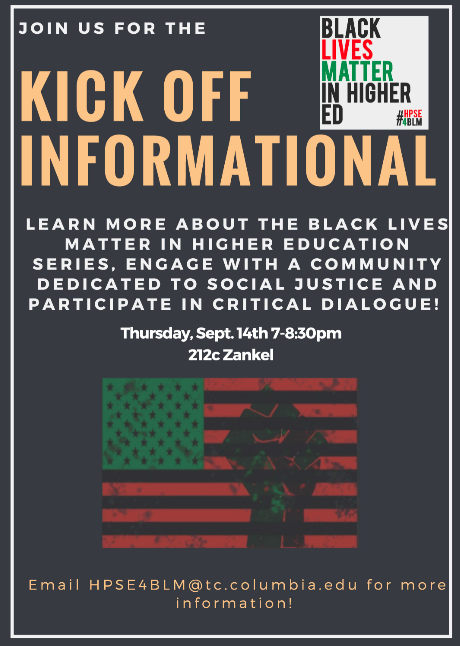
Fall 2017 Kick-off Informational

The Fall kick-off of the Black Lives Matter in Higher Education Series was held in the Zankel building at Teachers College.

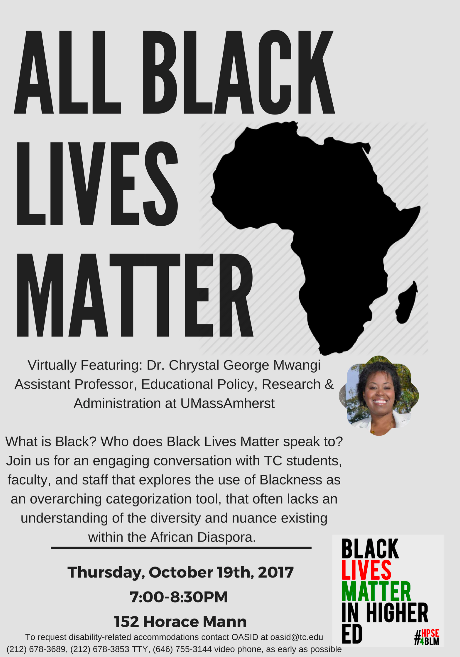
All Black Lives Matter

This seminar, held at Horace Mann, centered on what is Black and who does BLM speak to? The featured speaker was Dr. Chrystal George Mwangi, Assistant Professor, Educational Policy, Research and Administration at UMass Amherst. The presentation explored the use of Blackness as an overarching categorization tool that often lacks an understanding of the diversity and nuance existing within the African Diaspora.

2018

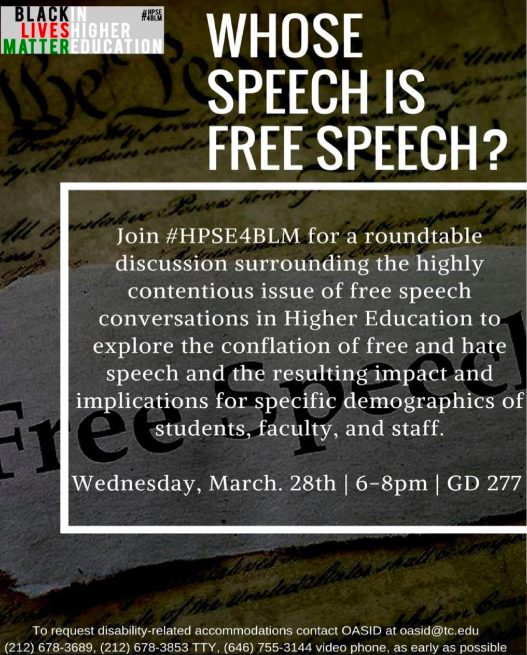
Whose Speech is Free Speech?

This roundtable discussion, held at Grace Dodge, focused on the highly contentious issue of free speech conversations in higher education. The discussion explored the conflation of free and hate speech and the resulting impact and implications for specific demographics of students, faculty and staff.

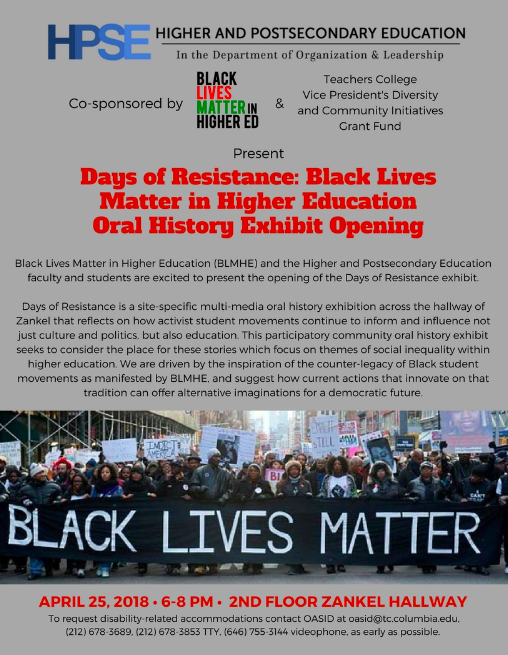
Days of Resistance: BLMHE oral history exhibit opening

This oral history exhibit opening and reception was held at Zankel Hall. It consisted of a site-specific multi-media oral history exhibition, across the 2nd floor hallway of Zankel, that reflected on how activist student movements continue to inform and influence not just culture and politics, but also education. The exhibit featured video oral history interviews with BLMHE student co-founders Kat Stephens, Charlen McNeill and Brian Allen.

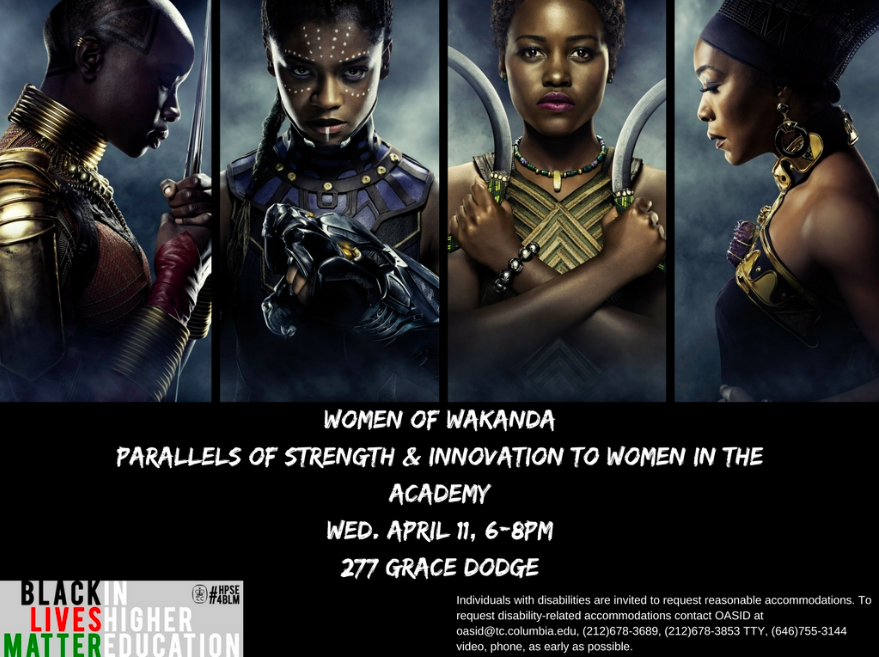
Women of Wakanda: Parallels of Strength and Innovation to Women in the Academy

This discussion was held at Grace Dodge.

ABC News interview; #BlackLivesMatter ; Deaths of Mack and Ross Jr.

In an interview with ABC News marking five years of Black Lives Matter, Cullors explained the impact the organisation had had on other causes. She said: “[BLM] has popularised civil disobedience and the need to put our bodies on the line... With things like the Women’s March, and Me Too, and March for our Lives, all of these movements, their foundations are in Black Lives Matter.”

By May 1st, 2018, a study found that the hashtag #BlackLivesMatter had been used nearly 30 million times on Twitter since the first instance in 2013.

As they marked five years of action, Black Lives Matter continued to highlight the deaths of Black people who had lost their lives at the hands of US police that year, including Grechario Mack and Kenneth Ross Jr.

2019

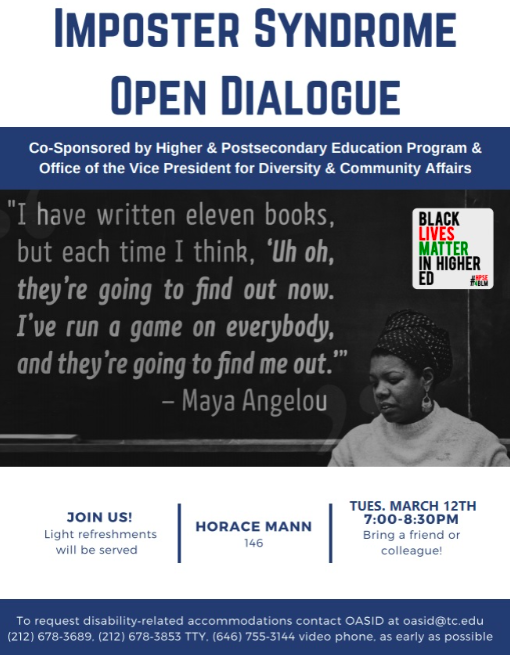
Imposter Syndrome Open Dialogue

BLMHE held an open dialogue to unpack imposter syndrome. Through faculty presentation, student perspectives, and reflection opportunities, the group was able to create a supportive environment for those struggling to find their place or voice in academia. This discussion was held at Horace Mann.

21 Savage arrest; Death of Isaiah Lewis

In February 2019, the rapper 21 Savage was arrested and detained by the United States' immigration agency, ICE. As a result, Cullors convened a group of 60 high profile stars from the music and entertainment worlds to advocate for his release.

Then, in May, Oklahoma teenager Isaiah Lewis was shot by police and killed. Days later, Black Lives Matter held a 100-strong rally in protest.

2020

Death of George Floyd; Global protests; Biden elected

Major protests were sparked at the end of May following the death of George Floyd in Minneapolis. A video showing a police officer kneeling on Floyd's neck went viral following his death. Police officer, Derek Chauvin, has since been charged with second-degree murder - raised from an initial charge of third-degree murder and second-degree manslaughter. Three other officers who were there have all been charged with aiding and abetting second-degree murder and aiding and abetting second-degree manslaughter. Their cases are also yet to go to trial. Black Lives Matter went on to organize protests around the world. In London, two Black activists Aima, 18, and Tash, 21, organized a rally in Trafalgar Square, which was attended by thousands on Sunday, May 31st. Many more have followed since. At one London protest, Star Wars actor John Boyega joined 15,000 others in Hyde Park, and told crowds: "Today is about innocent people who were halfway through their process, we don’t know what George Floyd could have achieved, we don’t know what Sandra Bland could have achieved, but today we’re going to make sure that won’t be an alien thought to our young ones."

In November, Joe Biden won the US Presidential election, and vote counts revealed that areas with high numbers of Black voters helped him win many of the states that went to Trump in the 2016 election.

2021

BLM nominated for Nobel Peace Prize; Chauvin Guilty of Murder in Floyd's Death

In January, the Black Lives Matter movement was nominated for the Nobel Peace Prize by Norwegian MP Petter Eide. His written nomination noted that, “awarding the peace prize to Black Lives Matter, as the strongest global force against racial injustice, will send a powerful message that peace is founded on equality, solidarity and human rights, and that all countries must respect those basic principles.”

On 20 April, former police officer Derek Chauvin was found guilty on all three counts relating to his killing of George Floyd – second- and third-degree murder, and manslaughter. The jury reached the verdict unanimously after 10-and-a-half hours of deliberations. Crowds who were gathered at the spot where Floyd was killed, outside the courtroom and across the US erupted into cheers as the verdict was read out.

Floyd’s family spoke of their relief and highlighted the work still to be done. “I am going to put up a fight every day,” said George’s brother, Philonise Floyd. “Because I am not just fighting for George anymore.”

Darnella Frazier, the passer-by who recorded the widely shared video of Floyd’s murder when she was 17 years old, said in a Facebook post: “George Floyd we did it!! Justice has been served.”

US President Joe Biden addressed the nation following the verdict, saying it's “a moment of significant change”, but added: “It's not enough. We can’t stop here. We’re going to deliver real change and reform.”

Bibliography

Altbach, P.G. “Patterns of higher education development,” p.15-36 in Altbach, P. G., Gumport, P. J., & Berdahl, R. O. (Eds.). (2011). American higher education in the twenty-first century: Social, political, and economic challenges. JHU Press.

Bonilla-Silva, E. (1997). Rethinking racism: Toward a structural interpretation. American sociological review, 465-480.

Bowman, N. A., Park, J. J., & Denson, N. (2015). Student Involvement in Ethnic Student Organizations: Examining Civic Outcomes 6 Years After Graduation. Research in Higher Education: Journal of the Association for Institutional Research, 56, 2, 127-145.

Castillo-Montoya, M., & Torres-Guzmán, M. (2012). Thriving in Our Identity and in the Academy: Latina Epistemology as a Core Resource. Harvard Educational Review, 82, 4, 540-558.

Cook-Sather, A. (2016). Creating Brave Spaces within and through Student-Faculty Pedagogical Partnerships, Teaching and Learning Together in Higher Education: Iss. 18, http://repository.brynmawr.edu/tlthe/vol1/iss18/1

Gibson, J. (March 07, 1996). “Can't we settle this?” Student conflicts in higher education and options for resolution. New Directions for Higher Education, 1995, 92, 27-34.

Hope, E. C., Keels, M., & Durkee, M. I. (2016). Participation in Black Lives Matter and deferred action for childhood arrivals: Modern activism among Black and Latino college students. Journal of Diversity in Higher Education, 9(3), 203.

Janesick, V. J. (2007). Oral History as a Social Justice Project: Issues for the Qualitative Researcher. The Qualitative Report, 12(1), 111-121.

Kimball, E. W., Moore, A., Vaccaro, A., Troiano, P. F., & Newman, B. M. (2016). College students with disabilities redefine activism: Self-advocacy, storytelling, and collective action. Journal of Diversity in Higher Education, 9, 3, 245-260.

Kohstall, F. (2015). From Reform to Resistance: Universities and Student Mobilisation in Egypt and Morocco before and after the Arab Uprisings. British Journal of Middle Eastern Studies, 42, 1, 59-73.

McAdam, D. (1986). Recruitment to high-risk activism: The case of freedom summer. American Journal of Sociology, 92, 64–90.

Palmer, P. (2009). The courage to teach. Hoboken, NJ: John Wiley & Sons.

Parsons, M and Ward, E. (2001), “The Roaring Silence: Feminist Revisions in the Education

Policy Literature,” Policy Studies Review 18 (2), 46-64.

Pascarella, E. T., & Terenzini, P. T. (1991). How college affects students: Findings and insights from twenty years of research. San Francisco, CA: Jossey-Bass.